








If you’ve ever looked closely at an antique diamond ring and wondered why the stone doesn’t sparkle like a modern one, you’ve probably been looking at an old cut diamond. Two of the most common are the old mine cut and the old European cut, and they’re easy to mix up.
Both were cut by hand long before modern cutting standards existed, and both have a soft, glowing look that many people prefer to a newer diamond. But they come from different periods, have different shapes, and behave differently in a ring.
Here’s how to tell them apart, what to know before you buy one, and how to protect it once it’s yours.
Quick Answer: What Is the Difference Between an Old Mine Cut and an Old European Cut Diamond?
The biggest difference is shape. An old mine cut diamond has a soft, squarish cushion outline, while an old European cut diamond is round. Both are hand-cut antique diamonds with a small table, a high crown, a deep pavilion, and a visible culet. The old mine cut is generally the older of the two and is typically found in Georgian and Victorian jewelry. The old European cut became popular as cutters moved toward round stones in the late 1800s.
If you can’t tell which one you have, you’re not alone. Many antique stones fall somewhere in between, and a jeweler can confirm the cut under magnification.
What Is an Old Mine Cut Diamond?
The old mine cut is one of the earliest brilliant-style diamond cuts. According to GIA’s guide to old mine cut diamonds, it was one of the most common diamond cuts from the early 1700s to the late 1800s, which is why you’ll most often see it in Georgian and Victorian jewelry. The name is thought to come from the older diamond mines of Brazil and India, before diamonds from Africa became common.
An old mine cut diamond typically has:
- A soft, squarish or cushion-shaped outline
- A small table, which is the large flat facet on top
- A high crown and a deep pavilion
- A large, open culet that looks like a small circle when you look straight down through the stone
- Larger facets that can be a little irregular, and a girdle that is often very thin in places
Because these diamonds were shaped by hand, no two are exactly alike. That one-of-a-kind character is a big part of their appeal.
What Is an Old European Cut Diamond?
The old European cut is the round cousin. It’s also hand-cut, but with a round outline, and it’s considered a precursor to today’s round brilliant. Round stones became much easier to produce after the bruting machine arrived in the 1870s, and old European cuts grew popular in the late 1800s and stayed in fashion into the early twentieth century. You’ll often see them in late Victorian, Edwardian, and Art Deco jewelry. In fact, Art Deco diamond engagement rings often feature old European cut or transitional cut diamonds.
An old European cut diamond typically has:
- A round outline, though often not perfectly round
- A small table and a high crown, with greater overall depth than a modern round brilliant
- A visible, open culet, usually smaller than on an old mine cut
- Larger, chunkier facets than a modern diamond
You may also hear the term transitional cut, which describes stones that fall between the old European cut and the modern round brilliant.
How Each Cut Handles Light
Many old cuts predate electric lighting, and GIA describes the old mine cut as a style designed to sparkle in candlelight.
A modern round brilliant is cut to return as much bright, white light as possible. An old cut diamond looks different. Its facets are larger, so instead of a fine, even sparkle you tend to see broader flashes with softer contrast. GIA notes that old mine cuts typically show less brilliance but more fire, which means more flashes of color. Old European cuts share much of this character, though their round outline looks more familiar.
View any old cut diamond in daylight, warm indoor light, and under a spotlight. It can look different in each.
See Old Mine Cut and Old European Cut Diamonds in Person
Photos only show so much. An old cut diamond is easiest to understand when you can tilt it in the light yourself.
Federal Way Custom Jewelers carries antique diamonds, including old mine cut and old European cut stones. Our antique and vintage collection has been developed since 2016 by Brandon Jenkins Moak, an accredited gemologist, and spans 250 years of jewelry history.
How to Tell an Old Mine Cut From an Old European Cut at Home
With good light and a loupe you can learn a lot, but treat it as a first look rather than a final answer.
- Look at the outline from above. Squarish and cushion-like points to an old mine cut. Round points to an old European cut. Because both were hand-cut, don’t expect perfect symmetry.
- Look through the top for the culet. A large, open circle at the bottom of the stone is a classic sign of an old mine cut. A smaller one often points to an old European cut.
- Check the table and facets. A small table, a tall crown, and larger, chunkier facets suggest an old cut. Small, sharp, evenly patterned facets suggest a modern stone.
Some stones are in between, and some are modern diamonds cut in the old style. GIA notes that cutters today are reviving old mine cuts, and that these newer stones tend to have thicker girdles and more precise cutting. Never try to pry a stone out of its setting for a better look.
For a firm answer, bring the piece to us. FWCJ offers identification services while you wait, typically at no charge, and our in-house gemstone expert, Brandon, can take a closer look at more complex or rare pieces.
Where You’ll Find Each Cut in Antique Rings
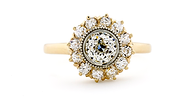
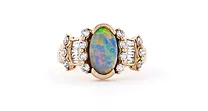
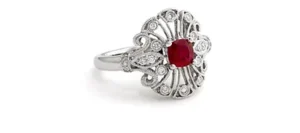
Old mine cut diamonds are often found in Georgian and Victorian jewelry. In Victorian rings, diamonds were often used to accent a colored gem like a sapphire or ruby, as in a halo ring.
Old European cut diamonds tend to appear in rings from the late Victorian years through the Edwardian and Art Deco periods. Our antique and vintage rings include old European cut, old mine cut, and rose cut diamonds, often with filigree, engraving, and other period details. You can also browse antique rings in our online shop.
Value and Buying Considerations
There’s no single rule for judging an old cut diamond, but a few things are worth understanding before you buy.
- Cut grades don’t apply the same way. GIA assigns a cut grade only to standard round brilliant diamonds, so old mine cuts and old European cuts don’t receive one. Judge these stones by how they look in person.
- The ring matters as much as the stone. Value depends on color, clarity, and size, but also on the condition, age, originality, and craftsmanship of the whole piece.
- Size can be deceiving. These stones are deep, so more of the weight sits below the girdle, and an old cut diamond can look smaller from above than a modern diamond of the same carat weight.
- Ask about condition. Look for girdle chips, worn prongs, and earlier repairs. At FWCJ, every antique is inspected and restored by our master goldsmiths before it is offered for sale, and it’s backed by our warranty.
If you’ve inherited a ring set with an old cut diamond, FWCJ has been a trusted buyer of antique jewelry for over 40 years, and our team can evaluate it before you decide anything.
Setting and Safety: Protecting an Old Cut Diamond
Old mine cuts in particular often have exceptionally thin girdles, which can make them more vulnerable to chipping. GIA recommends a secure setting that protects the girdle all the way around the stone.
A few habits help:
- Have the prongs and setting checked regularly, since worn metal is a common reason stones are lost
- Take the ring off for heavy work and workouts
- Avoid ultrasonic cleaners and harsh chemicals, and follow our guide to caring for antique jewelry at home
- If a stone feels loose, stop wearing the ring and don’t try to tighten it yourself
Our guide to repairing and reinforcing heirloom pieces explains what professional repair involves.
Should You Reset an Old Cut Diamond or Keep the Original Mounting?
It depends on the piece. If the original ring is in good shape, keeping it intact preserves its history, and the setting was often made for that exact stone.
A new setting can make sense if the original mounting is worn beyond a sound repair or you’d like to use the stone in a new custom piece. FWCJ’s master goldsmiths work with pieces clients already own, including remounting an heirloom diamond and restoring an antique for the next generation to wear.
Before any reset, have the diamond inspected for chips and fractures, and choose a setting that protects the girdle. Think carefully before recutting an old cut diamond, too. Recutting changes the stone permanently and typically costs weight and character.
Looking for an Old Mine Cut or Old European Cut Diamond?
Whether you’re shopping for an antique engagement ring, trying to identify the diamond in a family ring, or deciding whether to reset a stone, the team at Federal Way Custom Jewelers can help you understand what you have and what your options are.
FWCJ’s GIA-trained staff and experienced goldsmiths help clients in Federal Way and the greater Seattle area. Walk-ins are welcome, and appointments are preferred. We’re open Tuesday through Saturday, 10am to 6pm.
Frequently Asked Questions About Old Mine Cut and Old European Cut Diamonds
What is the difference between an old mine cut and an old European cut diamond?
An old mine cut diamond has a squarish, cushion-like outline and a large culet, and it’s most common in Georgian and Victorian jewelry. An old European cut diamond is round, usually has a smaller culet, and became popular in the late 1800s. Both are hand-cut antique diamonds.
How can I tell if my diamond is an old mine cut or an old European cut?
Start with the outline: squarish points to an old mine cut, and round points to an old European cut. Then look through the top for the culet, which is usually larger on an old mine cut. Many antique stones fall between the two, so a jeweler can confirm the cut under magnification.
Are old cut diamonds less sparkly than modern diamonds?
They sparkle differently. An old mine cut diamond or old European cut diamond usually shows larger, broader flashes and softer contrast than a modern round brilliant, with less brilliance but more fire, according to GIA.
Can an old mine cut or old European cut diamond be reset into a new setting?
In many cases, yes. The diamond should be inspected first for chips or fractures, and the new setting should protect the girdle all the way around the stone. For antique rings, also consider whether restoring the original mounting would better preserve the piece.